Comics were something I thoroughly enjoyed as a kid (and still enjoy now as an adult). I wasn’t a strong reader in my early years and struggled with literacy throughout schooling, but with comics I could pick-up the visual cues in each panel and follow the story. Like anime, the comics I could get, fed my imagination and took me on the most incredible adventures with the most amazing heroes. I particularly loved Batman and cherished the Batman comics I was able to collect. Collecting comics in a regional Australian town was a challenge. There were no dedicated comic stores – Newsagents were the only retail outlet where new comics could be purchased and getting consecutive editions of a particular title was difficult as each time the shelves were restocked the range of titles was likely to change. Added to this my parents weren’t big supporters of my comic reading and didn’t see the value in them, hence they were used as a form of reward or a bribery. I have a fond memory of getting a pile of them when I had my tonsils out, so my parents must have been especially impressed with my bravery – or felt some kind of guilt.
A cheap alternative to newsagent comics were 2nd hand comics available from the local book exchanges. Smelly places filled with mostly musty old paperbacks and enough Mills & Boon romance novels to sink the Titanic. But there were also lots of comics – especially Phantom comics, piles big enough to crush a man. Of course the same problem of getting consecutive editions was still an issue, so I was very rarely able to follow a complete story arc of any title and for the longest time I thought that comics were just small random snippets of bigger adventures that never got illustrated. What was a plus at a book exchange was the variety of comics on offer. There were the standard DC and Marvel titles, Archie, Hanna Barbera, 2000AD, Heavy Metal, Commando, Cracked and MAD – plus an array of strange miscellaneous comics from publishers now lost to time. There was however, no manga, nothing even close.
Even in the council and school libraries manga hadn’t yet made it to the shelves. In terms of library comics the only offerings available seemed to be Asterix and Tintin, it was almost as if these were standard issue for any library and as long as there were Asterix and Tintin comics to borrow there wasn’t a need for further comics to be added to the shelves.
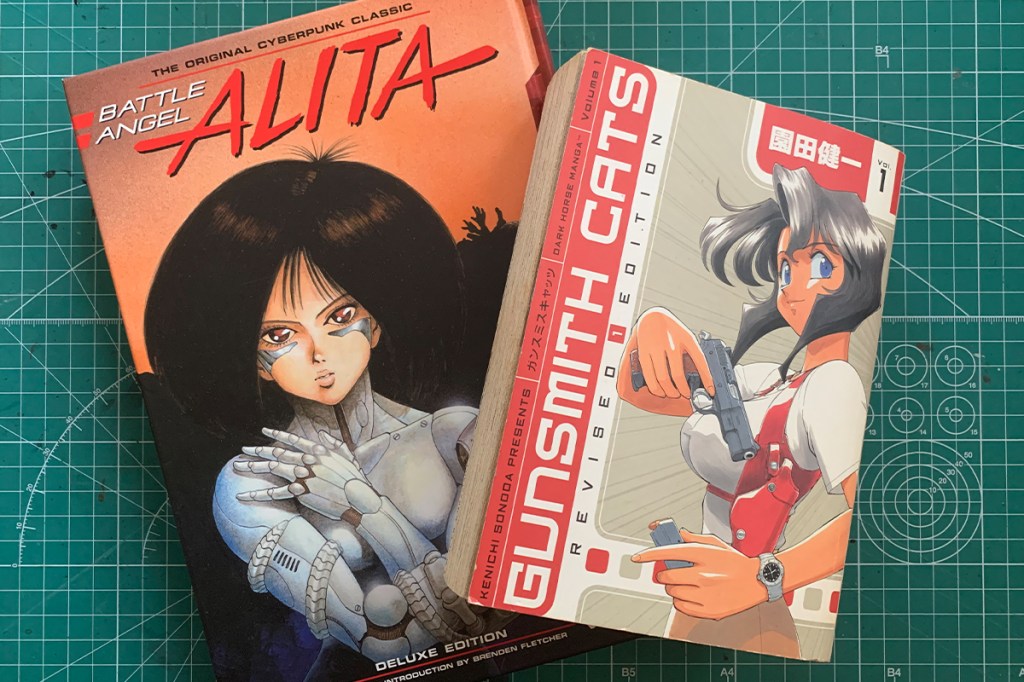
It wasn’t until I moved to the states capital that I gained access to my first dedicated comic store and my eyes really opened. I was lucky enough to reconnect with a friend from my hometown who’d also escaped regional obscurity and had become an active member of the local comics scene – both collecting and creating. It is through him and discussing my love of anime that he directed me toward manga. A title that he was collecting and suggested I try was Sanctuary by writer Sho Fumimura and illustrated by Ryoichi Ikegami. Instantaneously the aesthetic approach of manga hit me and like anime it pulled me straight in – I was hooked. That’s not to say ‘Sanctuary’ was the title for me, I wasn’t at a stage where a gritty political/crime story appealed to me. I was still very much a superhero centric reader craving escapism over semi realistic stories. It was long after this though that I met my first manga crush and started my noble quest to seek out more manga. Trolling through the 50 cent bins where surplus editions of comics were relegated for clearance I discovered my first edition of the Viz Media published Battle Angel Alita written and illustrated by manga artist Yukito Kishiro. The exciting storyline, incredible artwork, dystopian cyberpunk world and cute but deadly heroine of Alita was everything I was looking for. The black and white graphics were incredible with a juxtaposition of highly detailed background elements with simplified but hugely expressive characters – something I’d never seen in Western published comics. There was such a dynamic sense to the action and like anime there was an emotional impact. I hadn’t yet seen the Battle Angel Alita OVA but when I discovered this on video it was instantly added to my collection.
Around a very similar time I also discovered the Dark Horse published Gunsmith Cats written and drawn by Kenichi Sonoda. A very different story and setting to Battle Angel Alita but again the aesthetic qualities of the artwork triggered an instant appeal and upon browsing a few pages I knew I wanted to read and see more. While Battle Angel Alita was heavy on the sci-fi and serious storytelling, Gunsmith Cats offered humour and a small degree of light ‘ecchi’ situations that was a novelty for someone not exposed to these sexually suggestive scenarios. There was no escaping Kenishi Sonoda’s gun porn in which firearms were rendered in rich detail and specifications listed off for like minded gun otaku. As a fan of 80s big guns and big muscles action movies this was a nice inclusion and helped add detail to the Gunsmith Cats storylines.
Since discovering these titles in single (american formatted) editions, I have unfortunately lost them through successive moves and the need to downsize. Thankfully, I have been able to replace them with Omnibus editions – although I’m still hunting for the final Gunsmith Cats omnibus volumes. These first two manga titles have inspired me to read and collect many more manga titles including; Masamune Shirow’s Ghost in the Shell and Appleseed; Katsuhiro Otomo’s Akira; Kazuo Koike and Goseki Kojima’s Lone Wolf and Cub; Tsugumi Ohba and Takeshi Obata’s Death Note; and Daisuke Sato and Shoji Sato’s Highschool of the Dead to name just a few of my favourites.
My love of manga has also inspired my art practice and helped fuel my creativity. A long term goal of mine is to use my fervour for manga to complete a visual arts based PhD research project that examines the visual storytelling techniques used in manga and its continued influence over contemporary visual culture. Getting an academic institution to see the value in this kind of research has been a challenge and will likely form the basis of a future post.
Do you remember your first manga? What was it?
 JamesJimboJim